She switched majors when she learned this one thing

Jenny showed up to her senior prom in a dress she’d sewn herself, hand-painted flowers climbing up the fabric.
So, of course, she went off to study fashion design at Savannah College of Art and Design — one of the best programs in the country.
As she went deep into her major, she heard a professor say, “The real money and action in fashion isn’t in apparel. It’s in accessories. Specifically, shoes.” That caught her attention.
She connected with the department head who ran the shoe program — a professor who’d also come from Vietnam, whose passion for design matched her own. The fit wasn’t just right on paper. It was personal. That connection made the switch a no-brainer.
She pivoted into a program where she was one of the only women in the (work)room.
She couldn’t have known any of that when she carefully picked her major in her senior year. Jenny gained clarity by doing the work and following what lit her up, one step at a time.
Your teen will have to do the same. And your part in the “What major?” decision, as a parent, comes down to two jobs.
And neither one is picking the major for them.
So let’s sort the whole question into two piles: what actually helps your teen find their way, and what you can safely let go of.

WHAT MATTERS
You can see what your teen can't
Over the years, I’ve noticed how teens (well, most of us) can’t see their “thing.” Especially when it feels important, serious, and is related to a decision that can shape their life for years to come.
Your teen is standing too close to see themselves clearly. But you’re not. And you’ve been paying attention to them and their path for years.
I was on a call last week with a dad and his son, working through essay topics. The son pitched a few ideas. None of them rang true, and I could feel it.
Then the dad mentioned a project his son had built entirely on his own — with no teacher and no assignment. The second dad said it, I knew. That was the topic. Yet, the son hadn’t considered it because he didn’t even see it as an option. But his dad did.
And the noticing doesn’t even have to come from you.
My nephew toured a technical high school out in Denver before his senior year. At the end of the tour, the woman leading it — also the head of admissions — asked him which of the eight “majors” caught his eye.
“I don’t know,” he shrugged. “they all seemed kind of neat.”
She smiled. “Well, I can tell you, Hospitality totally lit you up.”
He blinked. “It did?”
He hadn’t noticed the difference, but she did.
He enrolled, chose hospitality, and became the star of his class. It’s like the program was built for him.
Your job isn’t to have the answer — that part belongs to your teen. It’s to hold up the mirror: to notice out loud and to reflect back what you see. That observing hands your son or daughter a real gift, one they can’t buy at Amazon.
Three questions for the dinner table
You already have more to work with than you might realize.
You’ve watched your teen climb onto a 5:30 am bus for a DECA competition without a single complaint. A teacher pulled you aside at conferences to tell you how your daughter spent the first week of school eating lunch with the new kid who didn’t know anyone yet. You’ve heard what teen can’t stop talking about days after it ended, even though you didn’t ask.
Write those hints down and tuck them away in your back pocket. Then bring three questions to the table — over dinner, in the car, whenever the moment’s right.
1. “What lights you up?”
This isn’t about what they’re good at, but what they come alive talking about, what they can do for hours unprompted. Because work with no joy is hard to sustain for four years, let alone forty.
If your teen draws a blank here, try a tactic from journalist Jodi Kantor: skip the “what’s your passion” question and get more tangible.
Have them carry a cheap notebook for two weeks and jot down, day to day, which tasks or experiences they enjoyed, which they dreaded, and whose company they liked. Did they feel connected to the work in front of them? And know that a “no” is just as valuable as a “YES!”… and the clues are all around them if they’ll just pay attention.
2. “What comes easily to you (even when it’s real work)?”
There’s a story I tell my students:
Little Fish comes home from his first day of school thrilled — he raced his new friend, Squirrel, at swimming and won every heat.
The next day, his class held a tree-climbing competition, and he came home crushed.
“Okay,” say his parents, “let’s practice climbing so you do better next time.”
You can hear how wrong that is. And yet we do it to our kids all the time — pour the effort into shoring up the weak spots instead of building on their strengths.
At a workshop once, a mom pushed back, “But piano’s an important skill, even if my daughter doesn’t love it…Doesn’t she need to stick with something?”
Fair question. But consider this: each of us gets only so much time. Every hour spent forcing some skill is an hour lost to another one a teen could adore and actually thrive in. And that flow-kind-of-feeling builds confidence. While forcing ourselves to do something we hate does not.
When we lean into what comes easily, the gains multiply, sometimes as much as 5x. Push against a weakness, and we get small, exhausting, frustrating gains at best. There is nothing noble about “hard” for its own sake.
► A shortcut: the P.A.I.D. buckets
So how do you spot the strength worth leaning into?
You can use four buckets called P.A.I.D., a framework I picked up from Donovan Dryer of Get Ready Coaching, who spent 17 years as a high school counselor.
Chances are, one of these will sound like your kid immediately:
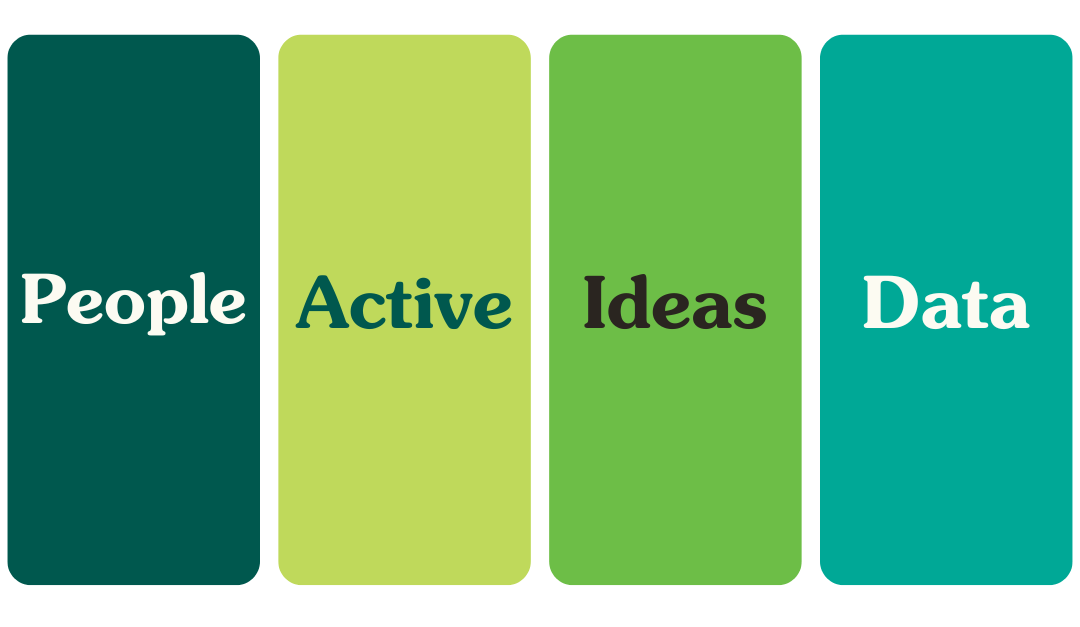
People — love people:
Coaching, teaching, nursing.Active — needs to move, work with their hands:
The trades, the outdoors, first response.Ideas — the creative type:
Writing, design, art, inventing.Data — organized, structured, precise:
Accounting, analysis, IT, project management.
But don’t ask which one they are — that’s a test. Instead, ask them to put the four in order: most-like-me, definitely least-like-me. And the two in the middle. The top of their list points toward majors. The bottom crosses a few off.
And if you want a tool that goes even deeper, take the comprehensive assessment found in one of my favorite books, StrengthsFinder 2.0 (also available online). It’s so worth the 30 minutes it takes.
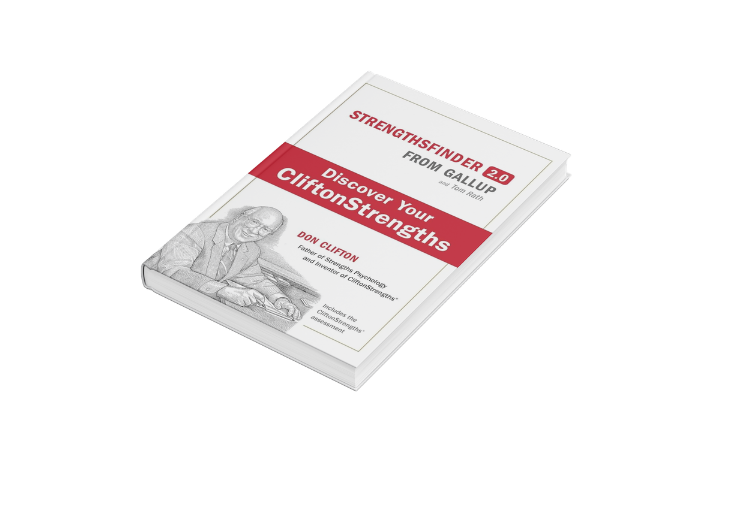
The CliftonStrengths assessment won’t hand your teen a major, but it’ll hand them insights and language around what they’re naturally wired to do well.
—--
Those are questions one and two. Here’s the third:
3. “Who is this for?”
This final question isn’t about the career or the paycheck. But who is a real person your teen can picture helping as they do the thing — is it a patient, a customer, a third grader?
What lights them up tells you they’ll enjoy it.
Ability tells you they’ll be good at it.
Who this is for tells you it’ll matter to them.
And a major that matters is the one they’ll be able to stay with when the going gets tough (and it usually does at some point during college).
Roughly 51% of adults say they would, given the chance, go back and study something other than what they chose the first time (Gallup). A clear answer to this “here’s who I’ll help” question now is one of the surest ways to keep your teen off that regret list.
What "happy" means to teens
Michael McKinnon, the college planner I worked for in Chicago’s western suburbs, had a favorite question for students: “If you could only have one — work you love, or work that pays a lot — which would you take?”
Michael asked my oldest daughter that once. “Money!” she said, instantly. So he laid out a half-dozen careers that would get her there.
And she turned down each one.
What she actually wanted was work that would let her be present to raise kids of her own someday. She chose teaching.
My daughter’s head said money. Her heart said classroom. The question set the two answers side by side, where she could finally see the difference and choose for herself.
Here’s the mix-up: I believe what parents want most is for their teen to be happy.
But teens don’t always know that. So they aim, without even realizing they’re doing it, at what they think will make you proud instead: the major that pays, the major that sounds impressive, or the one that aligns with family expectations (I’ve heard it: “In our family, we’re all doctors.”)
But in the end, as a parent, you’d trade all of it for them to love their life, whatever that looks like.
When your teen names a new direction
When your teen announces a sudden new interest, a hard turn, or a major that’s never come up before — try four words:
“That sounds great! Let’s go find out...”
Skip asking, “Are you sure?” or “But you said...” (as a younger parent, I did this. It didn’t end well.)
Instead, respond with: let’s go find out. Research it. Shadow it. Get a real feel for this direction first, before locking it in.
Even if you sense the new idea isn’t a good fit, let them discover that for themselves. (And if they don’t pursue the idea any further, well, that’s data too.)
What your teen needs right now isn’t a judge, but someone who believes in them enough to trust them while they figure it out, even if they’re a little off course for a bit. Your belief carries further than whether they ace what can feel, to them, like a pop quiz on “what are you going to study?”
WHAT DOESN’T MATTER
Declaring an “impressive” major
Somewhere around eight or nine, kids start fitting themselves into boxes — trading what they love and enjoy for what (or who) they think they’re supposed to be.
It’s part of why some 70% of the highest-achieving students point straight to doctor, lawyer, or engineer. Some of them have a true love of the work. But often the choice is made to please a parent, a teacher, or their community. Yet, the perceived prestige of a particular major buys your teen (and the world) nothing if it costs them the thing they’d have thrived in.
Climbing the old career ladder
For decades, the deal sounded simple: pick the right major, land the career, get the income, and you’ll experience happiness, except that these steps are no longer straight.

Here’s what I mean.
I met an artist at a Chicago show years ago who’d walked away from a Xerox sales job he couldn’t stand. Within a year of going all in on painting, he was out-earning the job he’d been told was the safe one and loving it. (I have a second artist friend in Philly who brought in $300K one year. So much for the “starving artist” stereotype.)
And your teen’s path won’t be the exception.
The Bureau of Labor Statistics has followed a group of Americans their whole working lives: they held an average of 12.9 jobs between ages 18 and 58.
Full career changes get counted more loosely, but the common estimate runs 5 to 7 in a lifetime. Either way, the number your teen should plan on is not one, which is great news (more on why in the next point).
A few fields still run on a straight technical track: nursing, medicine, anything built around a license. For most of the rest of our young people, what no longer matters is the major-to-career track. Their education is about learning to reason for themselves, to connect ideas that don’t obviously belong together, and to adjust when change happens suddenly. And AI is only making these more valuable to master.
A flawless first pick
A 2025 analysis of National Student Clearinghouse data found that of roughly 1.4 million students who started in fall 2017 and finished a degree by summer 2024, 47% had changed their primary major along the way. Nearly 1-in-2 students who walked in “sure” changed course. Whoa.
And the students who switched before junior year graduated at a rate ten points higher than the ones who stayed put due to momentum (or inertia). Yes, early clarity helps, and early course correction helps even more.
The goal is never a flawless first guess. It’s a quick pivot as more clarity arrives.
And if your teen can’t name their specific direction yet? “Undecided” is a real choice, not a white flag. (We’ll talk about this in more detail in an upcoming newsletter.)
One last thing
18 is just the first time your teen needs to set a direction. They’ll face bigger versions of it at 25, at 37, and at 41.
You can’t tell them which majors will still be around in ten years, which ones AI will reshape, or which ones the market will reward. And chasing those predictions is a losing game. Jodi Kantor, in How to Start: Discovering Your Life’s Work, points to two things we can focus on:
Craft: Real, hard-won skill at something specific — healing a patient through a complex surgery, writing an episode of TV that grips the viewers. As machines take on more of the routine work, mastery is the insurance — the deeper it runs, the harder your teen is to replace. Her line for it: “Craft is authority.” The value of a degree is about the expertise it builds, not the credential it prints.
Need: Not what’s hiring this year, but your teen's own read on what the world will keep needing — what care, what ideas, what work. As Kantor puts it, the move isn’t to guess the market. It’s to help remake it.
You can’t hand your teen craft or need, but you can give your teen a jump start this summer.
Help them get a real-world taste of a direction they’re curious about. Your part is to open the door; theirs is to walk through it.
Know someone worth shadowing? Make the introduction — then let your teen set up the day.
Point them to (or help them find) a professional in the field or a student already in the major, and encourage them to send an email or DM requesting an informational interview.
Spot a hands-on experience related to an interest — a summer program, a volunteer shift, a part-time job — and direct them to the sign-up.
And there’s a bigger reason to let them lead. In a year or two, when your teen moves into their dorm, you won’t be moving in with them. They’ll be on their own to make the call, send the email, and show up for themselves. This summer is a low-risk time to practice these skills, while you’re still close enough to help if needed.
And each experience or conversation adds a line to their “I like that” list, or it crosses something off (which is just as useful).
As they invest in getting more clarity now, choosing a major feels less like throwing a dart and more like the next logical step in something they’ve already begun.
With love during this fast-changing moment, and steady faith that your teen is up for the adventures ahead,
Two new essay workshop dates now open:
JOIN the hundreds of proactive parents who trust my bi-weekly newsletter to stay in the know and keep their college-bound seniors on track.